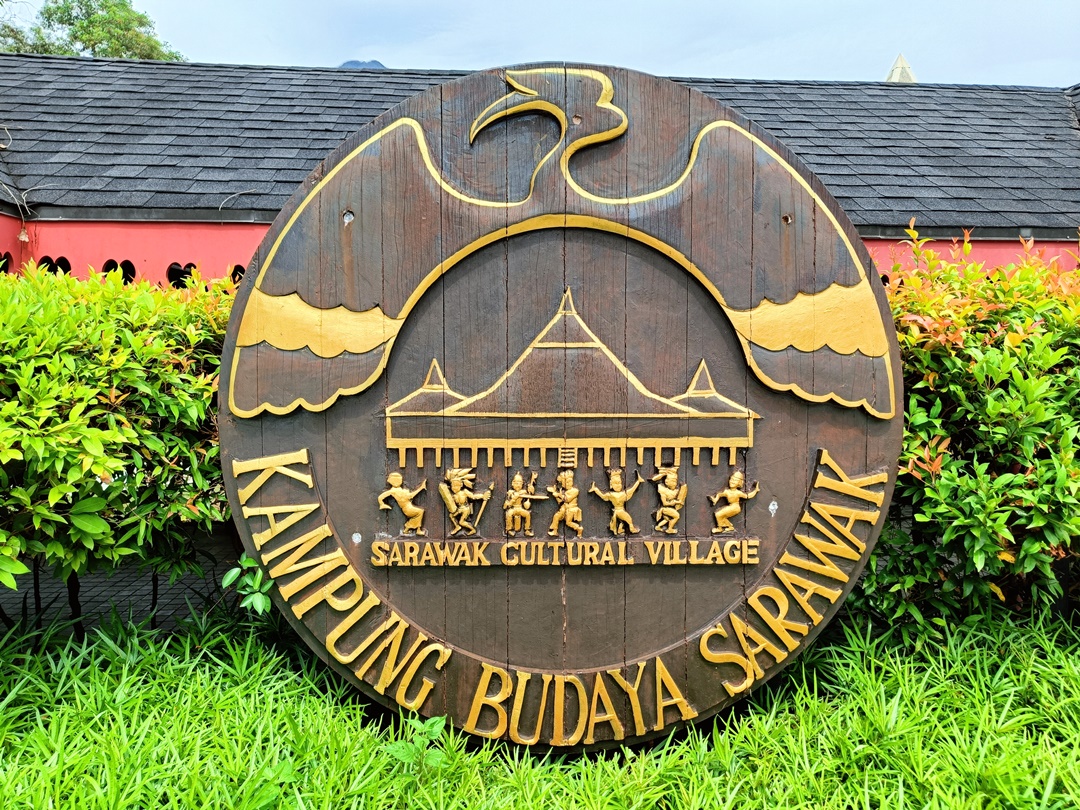
Sarawak Cultural Village is a “living museum” where visitors can immerse themselves in the typical daily life of a Sarawakian tribal villager. The sprawling 6-hectare site in Santubong features replicas of traditional houses and buildings of seven Sarawakian tribes: Iban, Bidayuh, Orang Ulu, Chinese, Malay, Melanau, and Penan.
Table of Contents
- How to Get There
- Admission Price and Opening Hours
- What to See
- Facilities
- Restaurants & What To Eat
- Saturday Worthy?
How to Get to Sarawak Cultural Village
The Sarawak Cultural Village is located in Santubong, 35km north of Kuching. There are no public buses from Kuching to the Sarawak Cultural Village. Details about a shuttle from the Grand Margherita Hotel are old information, and that bus is no longer running.
If you’re not already staying in the Santubong area, you’ll have to use the Grab e-hailing app to take you there. The journey takes 45 to 60 minutes and can cost up to RM80 one way on Grab. The difficult part will be getting a Grab driver back to Kuching, so plan accordingly with the app’s pre-booking feature or negotiating with the driver who takes you to Sarawak Cultural Village.
The most stress-free option is to hire a driver for the day. You can combine your visit to the Sarawak Cultural Village with the nearby Santubong National Park or Damai Beach, and your driver will wait patiently for you.
Admission Price & Opening Hours of Sarawak Cultural Village
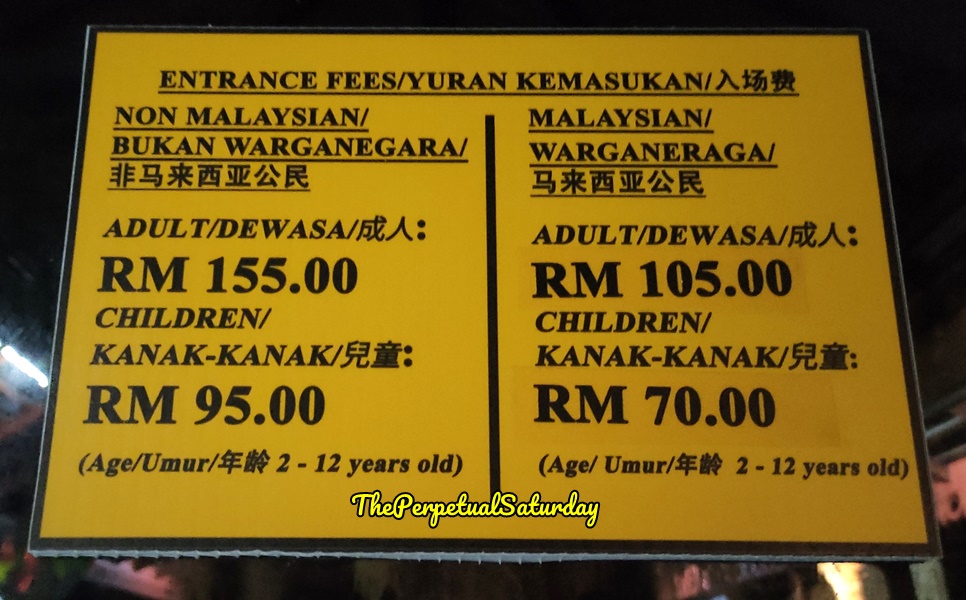
Non-Malaysian Adult: RM155.00
Non-Malaysian Child: RM95.00
Malaysian Adult: RM105.00
Malaysian Child: RM70.00
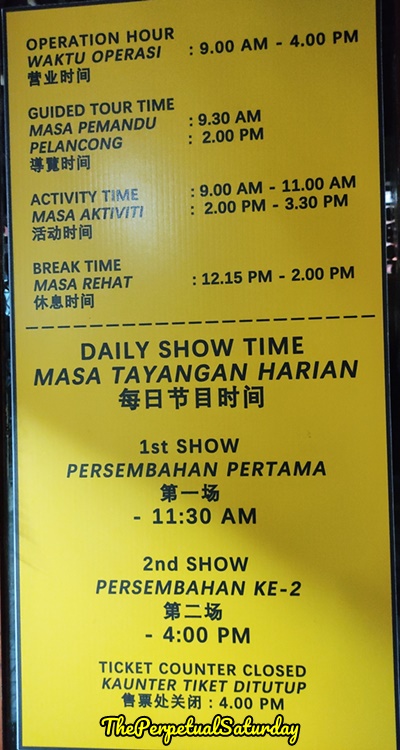
The Sarawak Cultural Village is open from 9 am to 5 pm, but tickets are only sold until 4 pm.
What to See at Sarawak Cultural Village
Traditional Houses
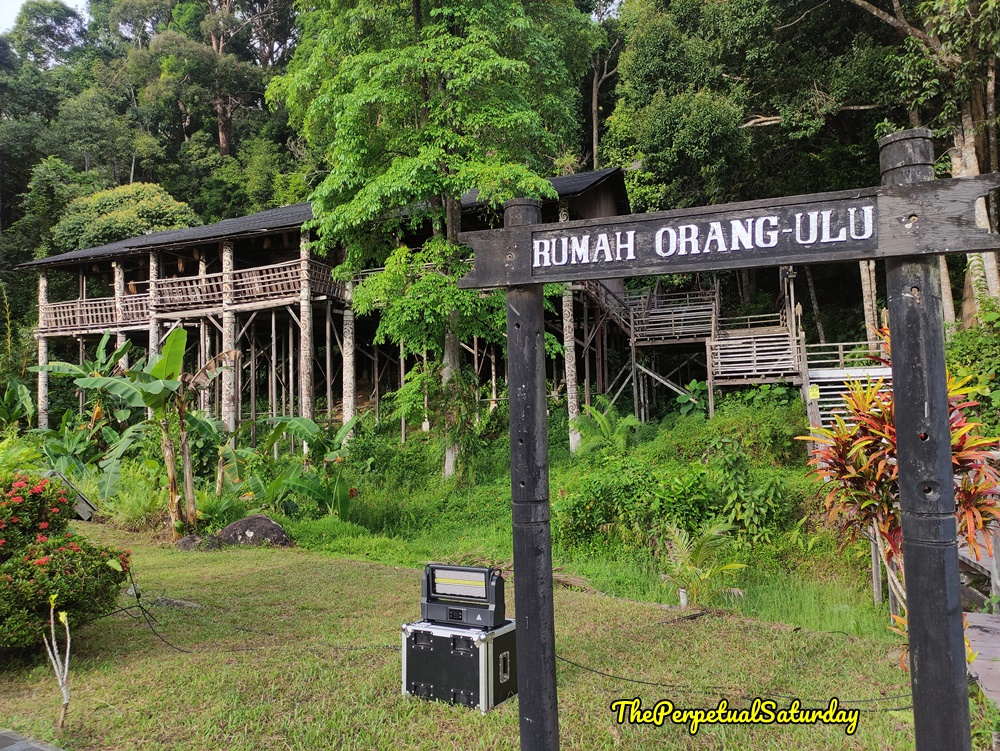
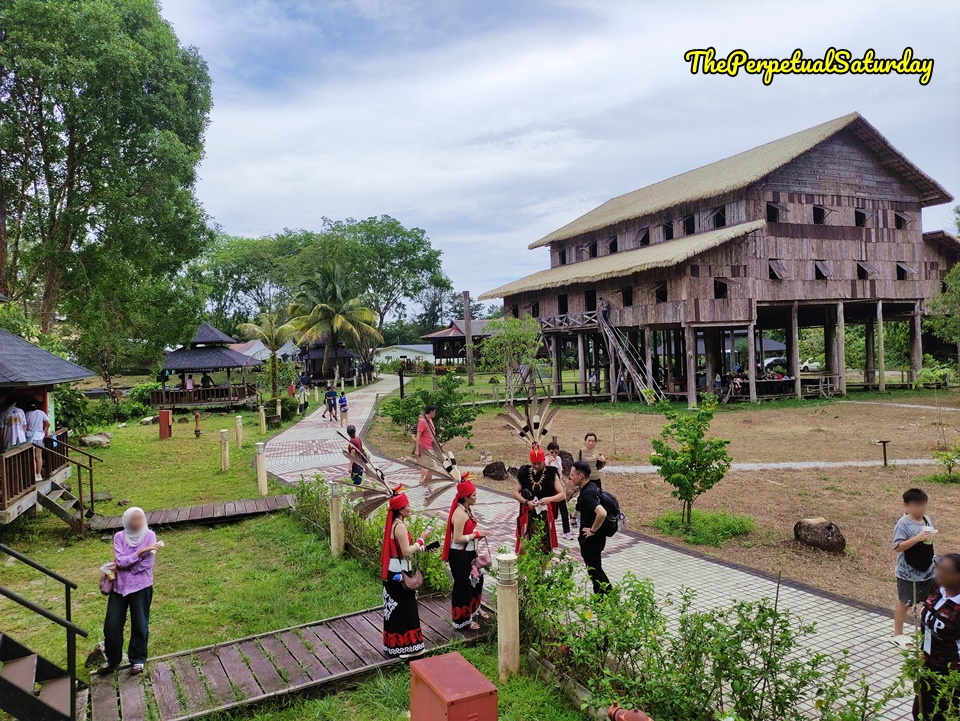
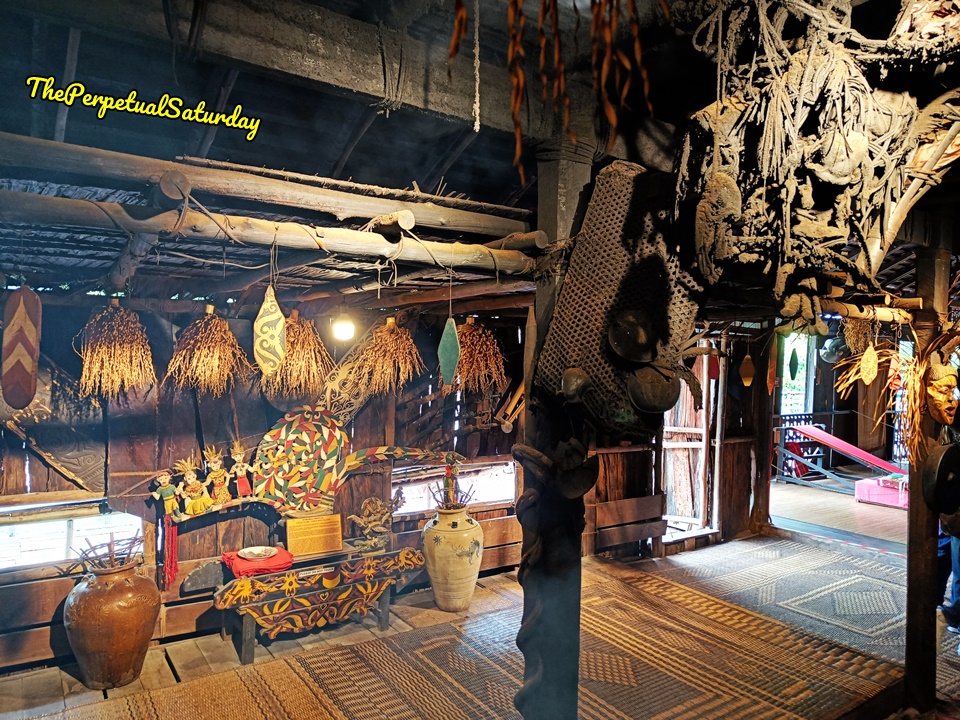
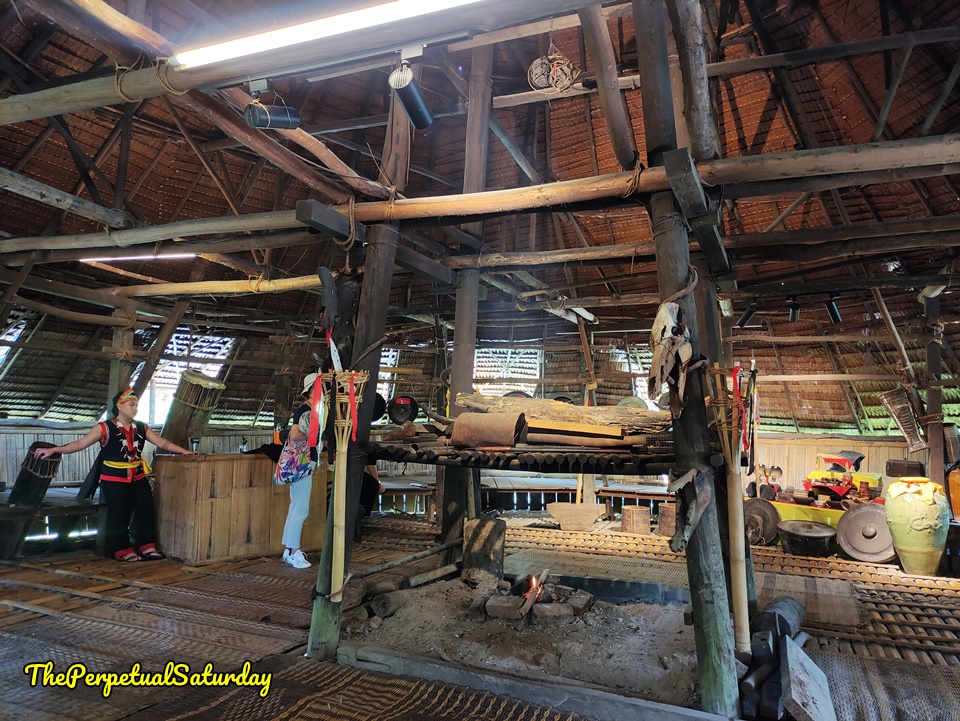
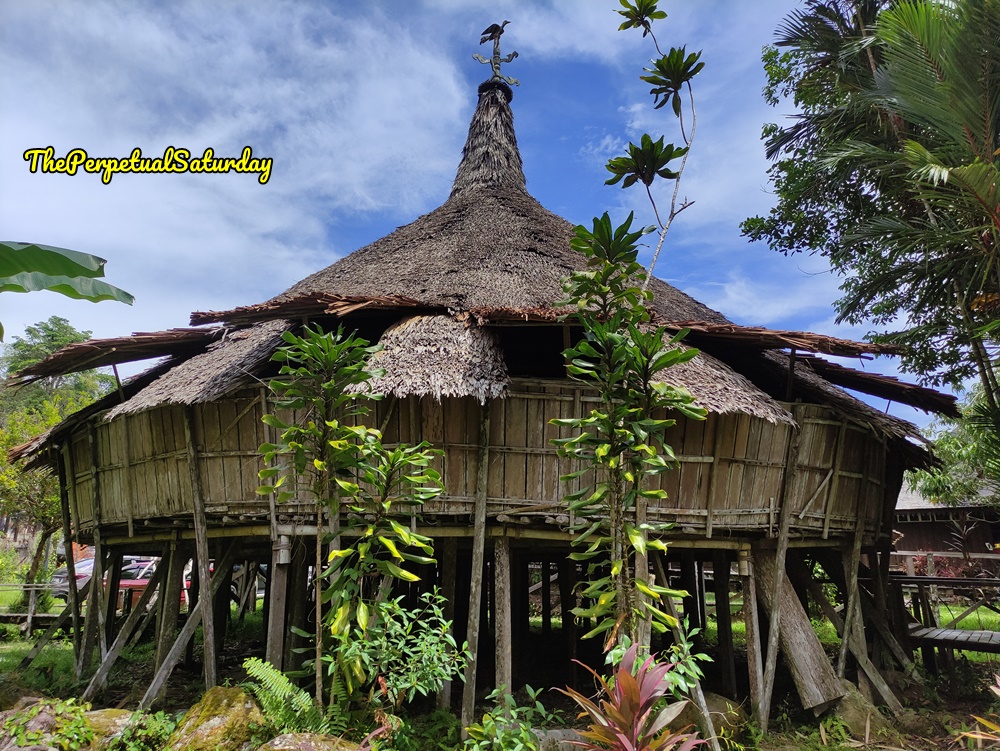
There are seven traditional houses, each dedicated to a specific Sarawakian tribe such as Iban, Melanau, or Orang Ulu. These homes contain a collection of items and decorations, from everyday crockery to ritualistic garments.
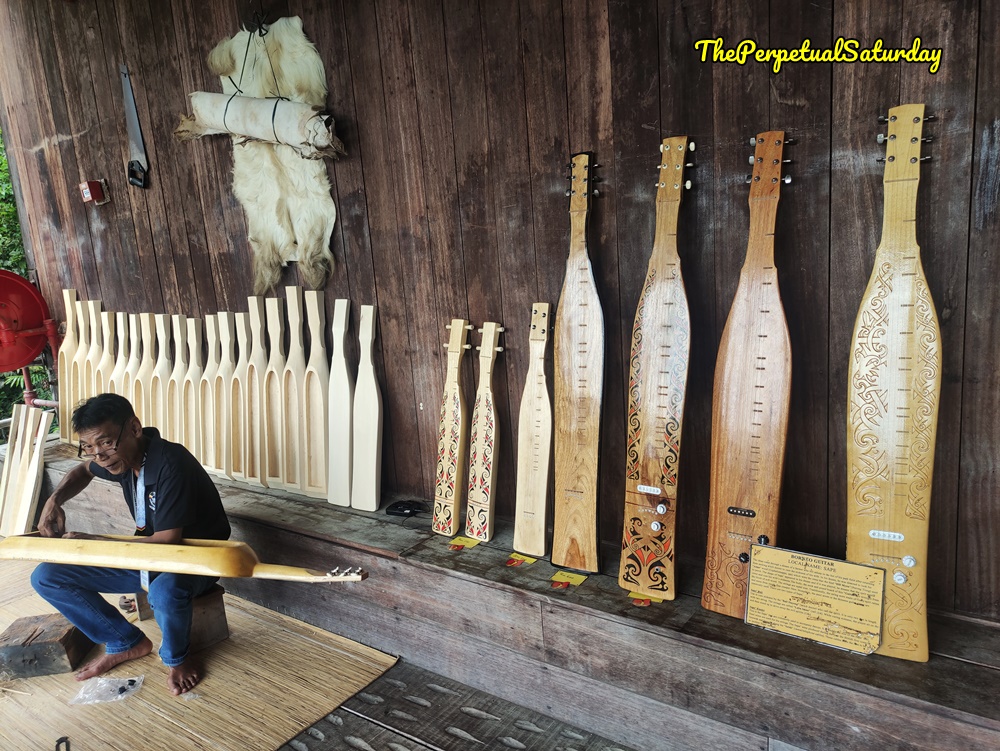
Some of the longhouses had items for sale. One had bagged dry snacks in the kitchen area, while another house had some ladies with traditional jewellery. The most interesting was a man carving and selling sapes (Bornean guitars).
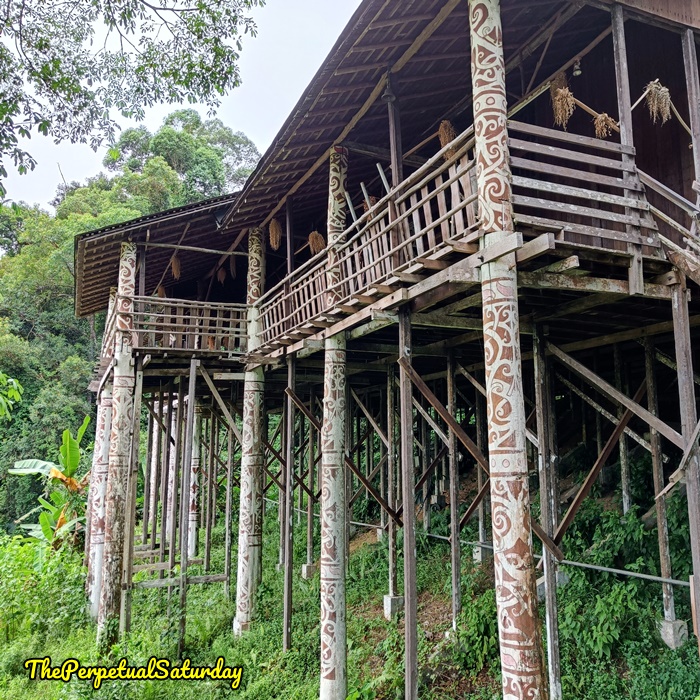
Don’t forget to stop and admire the architecture from the outside. I especially liked the Bornean stairs, which are a bit of a challenge to ascend and descend. However, they are actually a very efficient design… if you were barefoot like a Sarawakian!
Daily Cultural Show
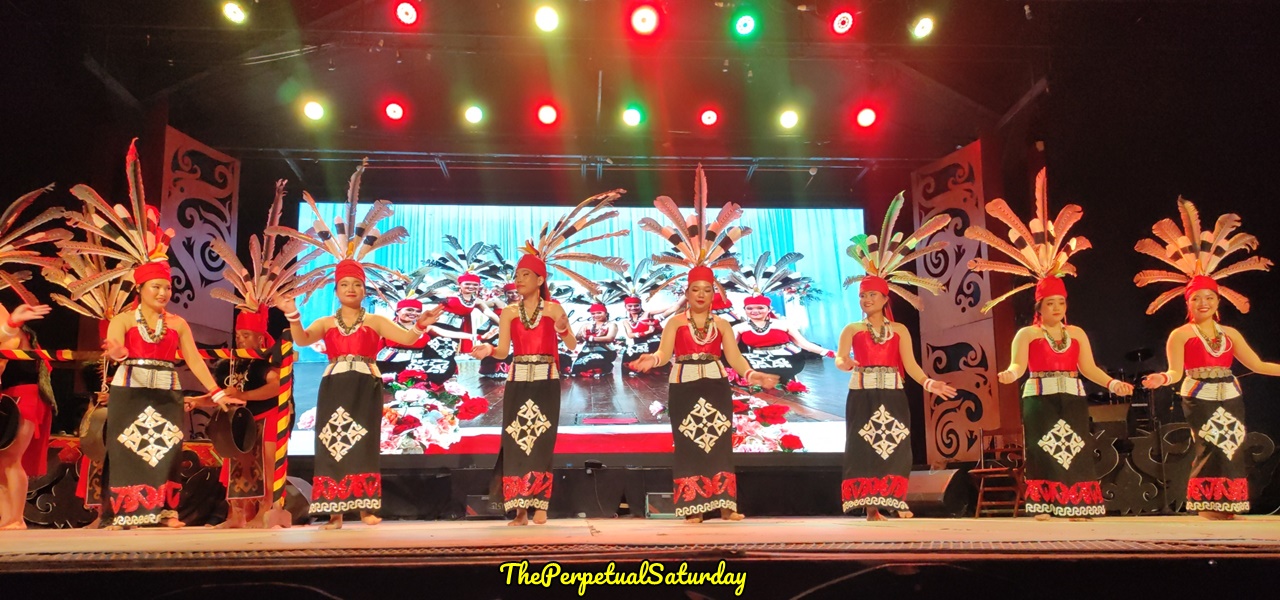
You can’t come all the way to the Sarawak Cultural Village and not take in the daily show. There are two showtimes at 11:30 am and 4 pm. The show includes several music and traditional dance performances.
Music House Gallery
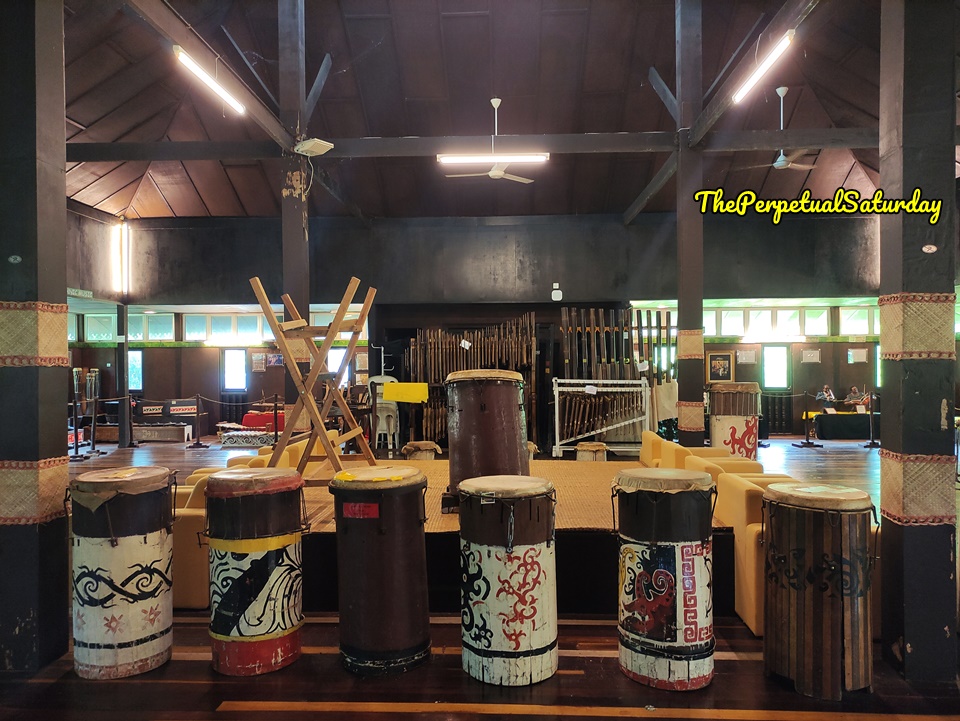
This large square structure contains all sorts of intricately designed musical instruments such as drums, sapes, bamboo chimes and more. There’s also a lot of information about the Rainforest Music Festival, a huge annual event at Sarawak Cultural Village.
Fruit Orchard and Herbal Garden
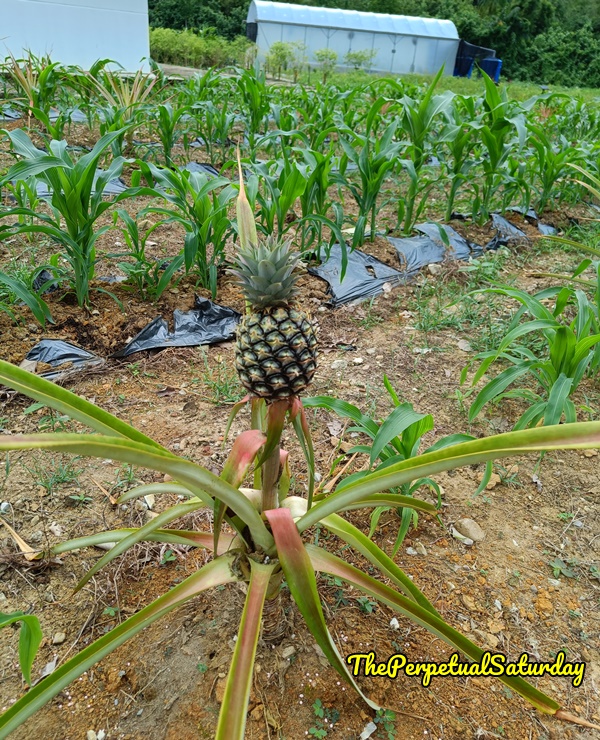
The Damai Fruit Orchard and Herbal Garden looks functional – perhaps the on-site restaurant uses what grows here in their food. There’s a simple dirt path among the squat, indigenous plants. I wouldn’t linger too long here, as there can be a lot of mosquitoes around.
Chinese Pavilion
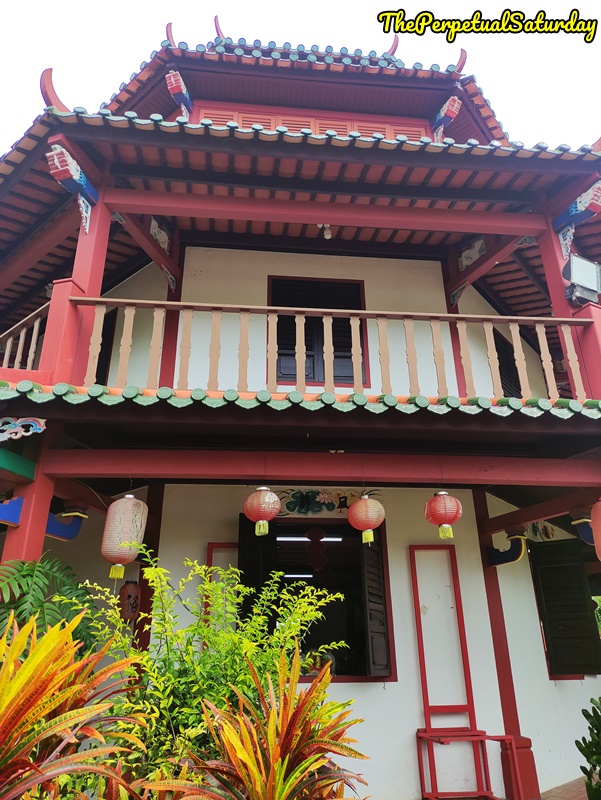
This multi-storied red octagonal tower flanks the main entrance to the village. The interior has a simple setup with lots of red decorations. The real attraction is taking the stairs to the upper level for a view of Mount Santubong and the village below.
Blowgunning and Sword Making
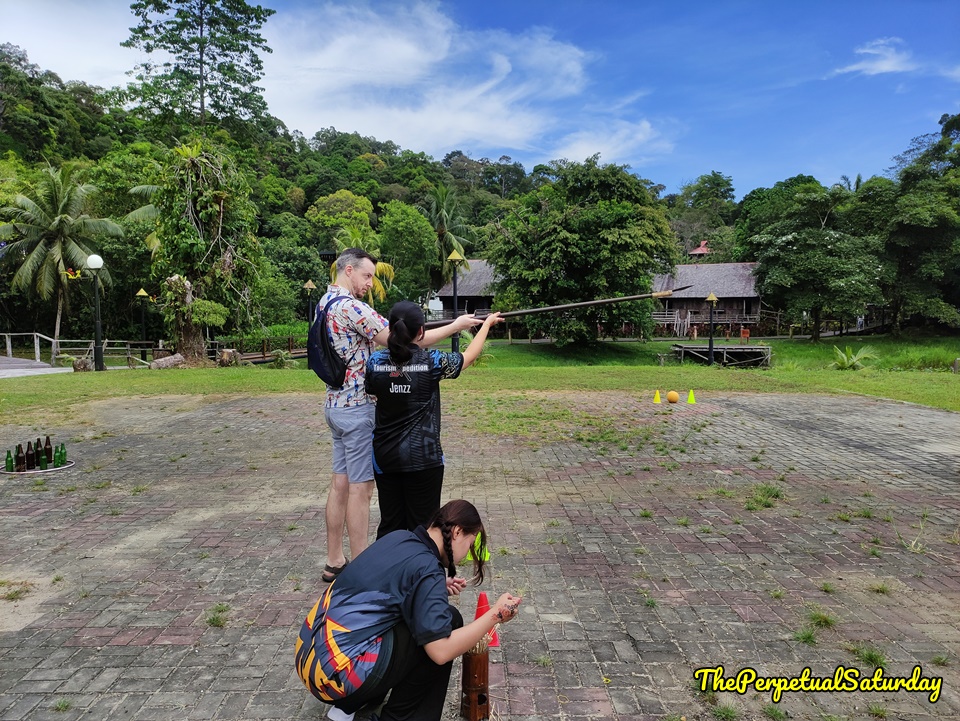
There’s a large paved space on the lawn in front of the Orang Ulu Longhouse with some fun activities. The activities may change with the seasons, but we were able to practise shooting blowguns at bullseye targets set up about 5 metres away. The price was RM7 for 5 shots or RM10 for 7 shots. There was another blowgun space set up at the Penan Hut, but it was much less inviting.
Not far away is the Parang Ilang Making Hut. Inside, there was a man carefully handcrafting traditional swords of the Iban and Dayak people of Sarawak. These formidable curved weapons were used for headhunting ceremonies. He had swords as long as machetes, but also smaller bushcraft knives that would be a great souvenir for an outdoorsman. The blades are beautiful, but very pricey.
Facilities
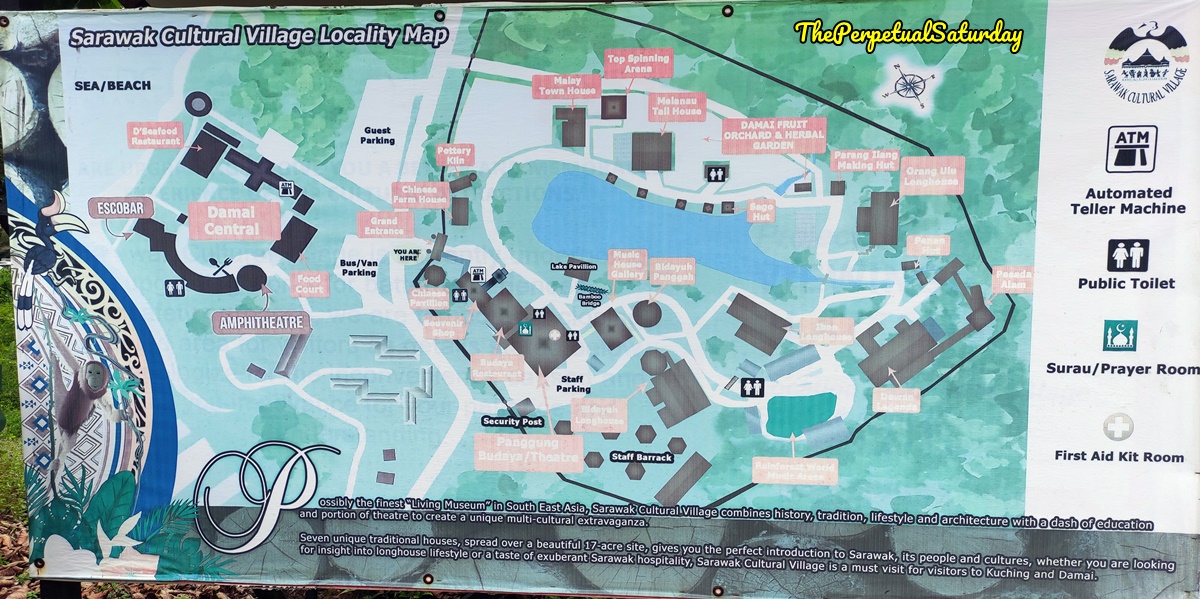
There are three main washroom facilities on the grounds. The large building near the entrance, which houses the gift shop, restaurant, and theatre, has the cleanest washrooms. They are also restocked more frequently than those found elsewhere in the village. There’s another toilet further south along the path next to the Rainforest Music Arena. Finally, there’s a toilet on the north side of the lake in the orchard and herbal garden. This one was the roughest, with no toilet paper or soap when I went to use it. All of the facilities have sitting-style toilets.
What to Eat at Sarawak Cultural Village
On-Site
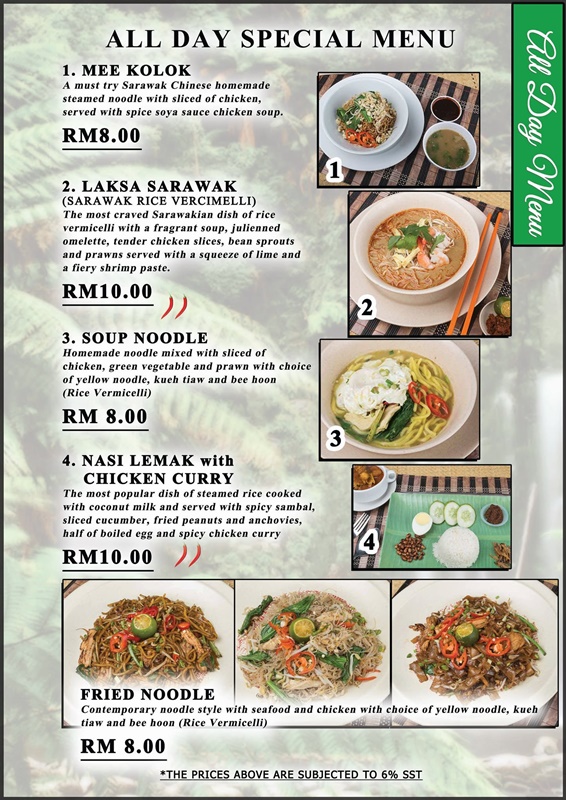
The Budaya Restaurant is the go-to place if you don’t want to leave the grounds. The restaurant is alfresco with no air-conditioning, but it’s covered from the sun by a pretty patterned ceiling reminiscent of a Triforce. The Budaya Restaurant menu is very Sarawakian with fried rice, laksa, and other local specialties. You can view the entire menu on their Facebook page.
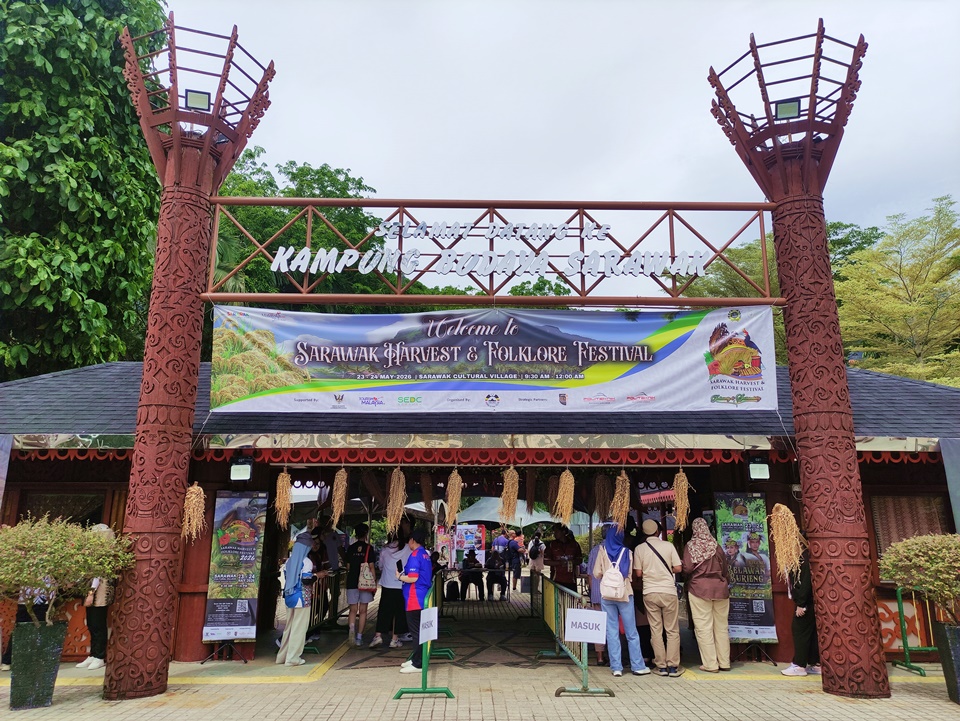
I also saw food being served under the Melanau Tall House and in a large tent on the west edge of the lake selling fried chicken, curries, and nasi lemak. However, we visited during the Sarawak Harvest and Folklore Festival, so these additional vendors are probably only present for the festival to handle the larger crowd.
The Sago Hut is a permanent fixture of the Sarawak Cultural Village, with its own dedicated structure and a labelled location on the village map. This little open-air hut on the north edge of the lake cooks up sago pancakes with gula apong – small dry discs served with dried coconut and natural Sarawak palm sugar. The neighbouring huts sell coffee and other small snacks, but these vendors might’ve been temporary for the Harvest Festival as well.
Damai Central
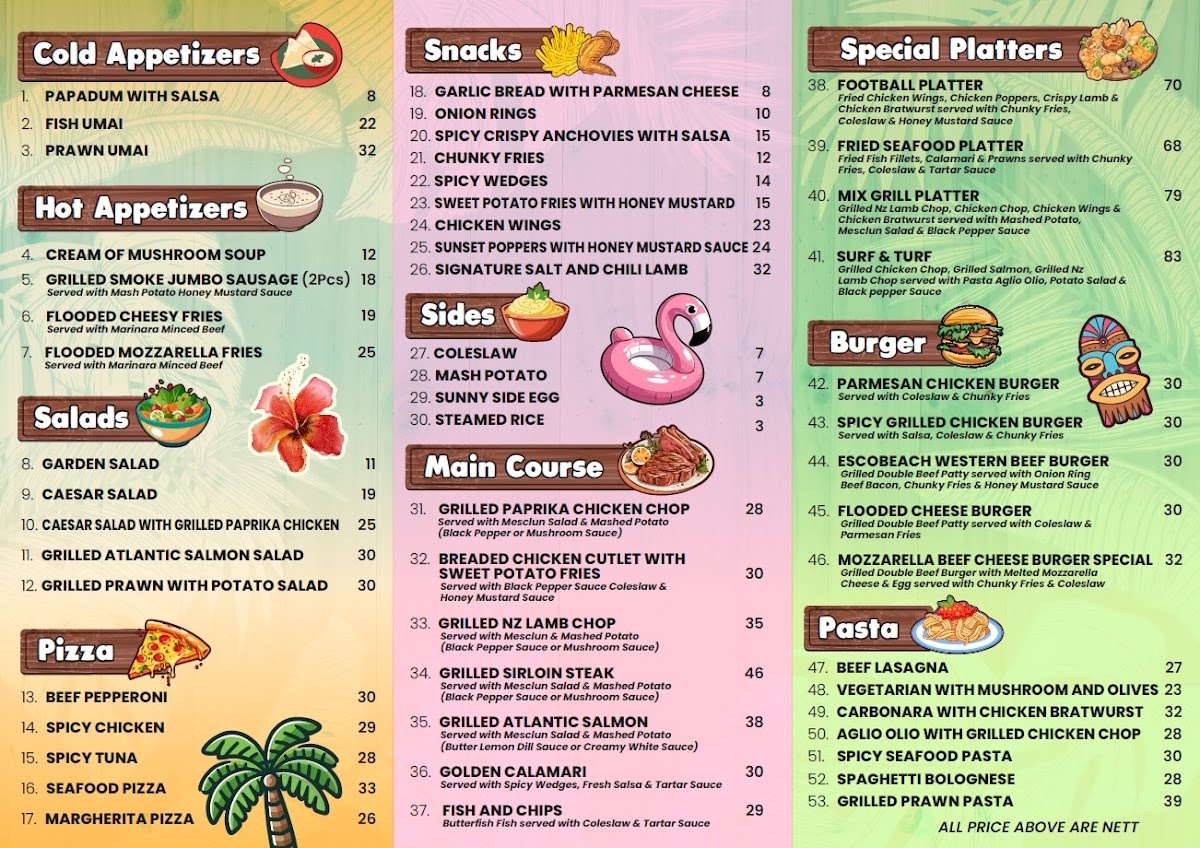
Since tickets should allow re-entry (ours did), you’ll have more variety by going across the street to Damai Central. My recommendation is to go to Escobar, a mid-range restaurant serving local and Western cuisine. We ate there twice during our stay in Santubong, and our food was great both times. Other options include the upscale D’Seafood Restaurant and a casual open-air food court serving local Malaysian food. The Damai Central plaza also contains a 7-Eleven if you only want a quick snack.
Saturday Worthy?
The ticket price – for foreigners and Malaysians – is absurdly steep for this attraction in my opinion. I would estimate that most visitors would spend a couple of hours here, even with taking in the cultural show.
The Sarawak Cultural Village grounds just felt too sparse. It needed more activities and information boards so visitors can learn more about the different cultures. The experience would have been even more engaging and immersive if each traditional house had more staff on hand to share stories about history, architecture, and the specific tribe it represents. The Bidayuh House had one such gentleman in traditional Sarawak dress who talked eagerly about funeral practices. However, most of the houses just had a bored attendant staring at their phone. As it was, it felt like we were simply set loose to look at cultural artifacts without knowing their significance.
If your schedule is flexible, you can get much better value on admission tickets by visiting during the Sarawak Harvest and Folklore Festival (usually in late May). We paid just RM20 per pax for daytime entry. During the festival, there’s also a musical drama at night that is pretty cool and worth seeing, which is RM50 per pax.
I would say the Sarawak Cultural Village might be worth visiting if your hotel is in Santubong and you’ve never been to a Bornean cultural village before (like Mari Mari in Sabah). I would recommend going to other Sarawak attractions (like Semenggoh Nature Reserve or any of the National Parks) over Sarawak Cultural Village if you’re based in Kuching, though. Since the journey from Kuching is so long, expensive and difficult, only the most gung-ho traveller wouldn’t help but feel a little sour paying for an expensive ticket to wander the disappointing grounds in the oppressive heat.
Sarawak Cultural Village Website: https://scv.com.my/